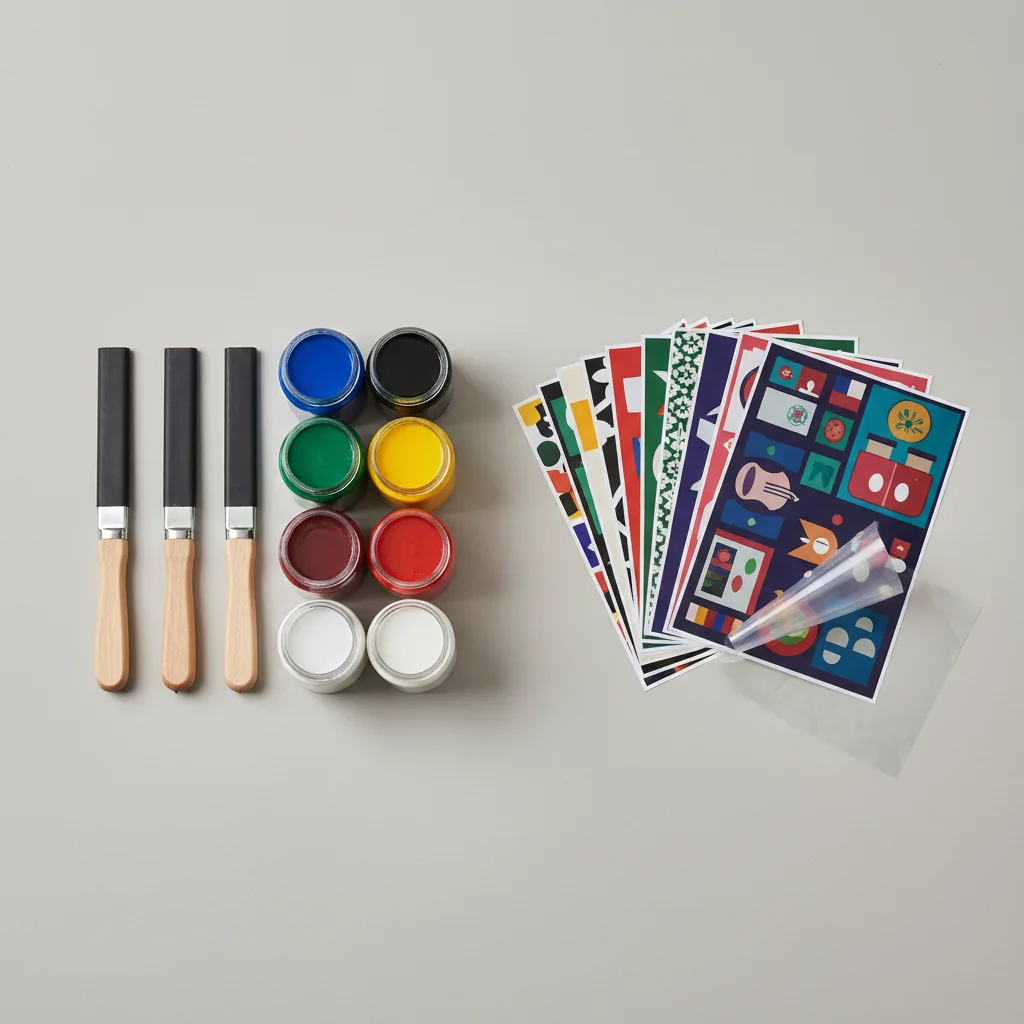
How Each Method Works
To compare DTF and screen printing fairly, you need to understand what each process involves — because the differences in process drive most of the differences in cost, quality, and limitations.
Screen Printing Process
Screen printing is an analog process that forces ink through a fine mesh screen (stencil) onto the substrate. Each color in your design requires its own separate screen. A two-color design requires two screens; a six-color design requires six screens. Creating each screen takes time and costs money — this is called the setup cost, and it is screen printing's biggest economic limitation for small orders.
Once screens are made, screen printing is extremely fast. A good screen printing shop can produce 500+ shirts per hour. The inks sit on top of the fabric in a thick, opaque layer that is highly durable and has an excellent feel. Screen printing excels at large-volume, single-design runs where the setup cost is amortized across many units.
DTF Process
DTF (Direct to Film) is a digital process. Your artwork is printed on PET film using a digital inkjet printer, the film is coated with hot melt adhesive, cured, and shipped to you ready to press. There is no screen setup — the printer reads the design file directly and prints it. A one-piece order costs the same per-unit as a 10-piece order. Complex artwork with 100 colors costs the same as a simple two-color logo.
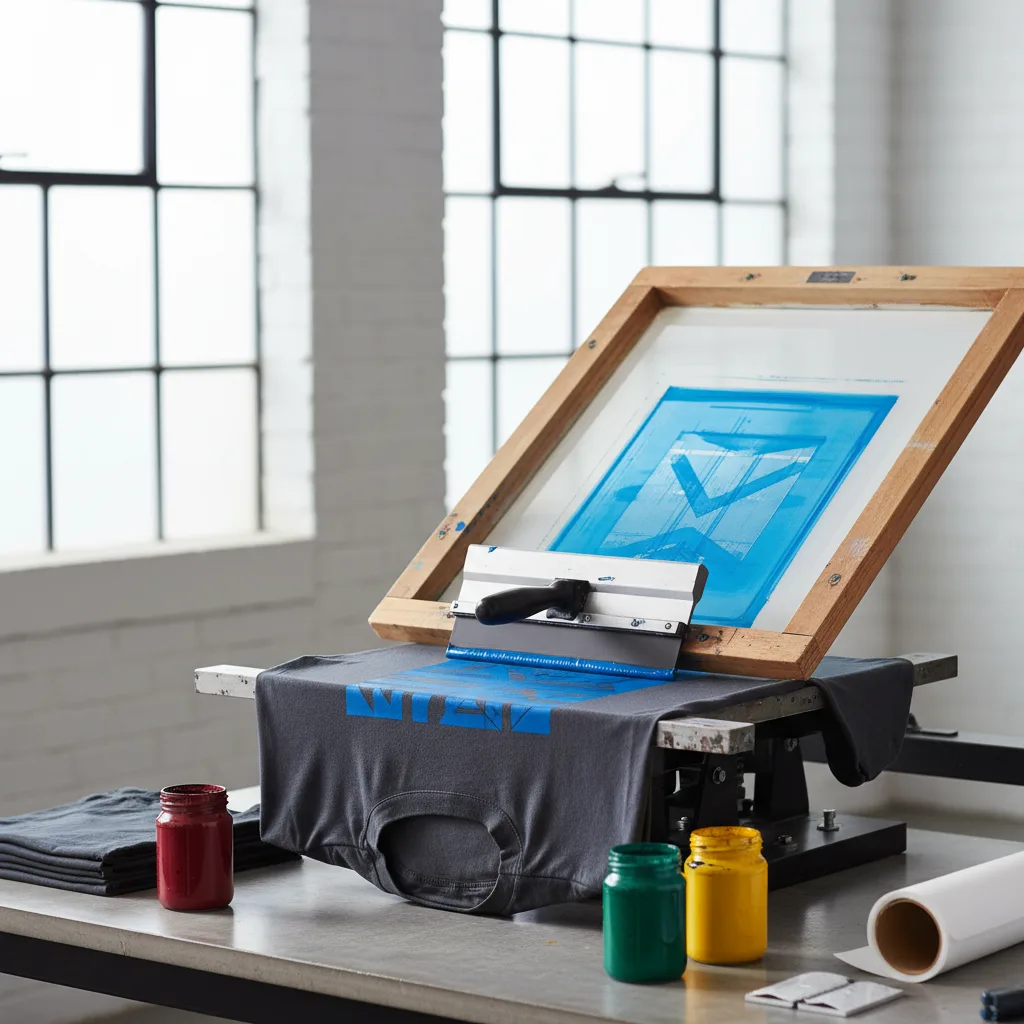
Cost Breakdown
Understanding the cost structure of each method helps you identify the break-even point — the order size at which screen printing becomes more economical than DTF.
Screen Printing Costs
- Screen setup fee: $15–35 per color, per design. A 4-color design might cost $60–140 in setup alone before the first shirt is printed.
- Per-shirt print cost: $2–5 per shirt at typical volumes, dropping with higher quantities
- Minimum order: Most shops require 24–48 pieces minimum to make setup economical
- Artwork preparation: Complex designs may require color separation fees ($25–75)
DTF Costs
- Setup fee: None. You pay only for the transfer itself.
- Per-transfer cost: $1.50–5.00 depending on size, from ColorFuse Prints
- Minimum order: 1 piece. No minimum.
- Artwork requirements: Standard image files (PNG with transparent background). No color separations needed.
| Order Size | DTF Total Cost (approx.) | Screen Print Total Cost (approx.) | Winner |
|---|---|---|---|
| 1 shirt | $3 | $80+ (setup dominates) | DTF |
| 12 shirts | $36 | $100–150 | DTF |
| 24 shirts | $72 | $80–120 | DTF or tie |
| 50 shirts | $150 | $100–150 | Tie or screen |
| 100 shirts | $300 | $150–200 | Screen printing |
| 500 shirts | $1,500 | $400–600 | Screen printing |
The break-even point varies by design complexity and shop pricing, but is typically around 36–72 pieces for a simple 2-color design.
Print Quality
Color Capability
DTF wins decisively for full-color, photographic, or gradient-heavy designs. Because it is digital, DTF reproduces any color, any complexity, any level of detail at no additional cost. Screen printing is limited by the number of screens you pay for — and achieving smooth gradients with screen printing requires expensive specialty techniques like halftone printing or simulated process printing.
Color Vibrancy
On a head-to-head comparison for a simple bold design with solid colors, screen printing's thick plastisol inks are extremely vibrant — arguably more vibrant than DTF, especially on dark garments. A 4-color screen print on a black shirt looks bold and opaque in a way that is difficult for DTF to match on the deepest blacks.
Fine Detail
DTF wins for fine detail. Thin text, small type, delicate linework, and intricate patterns all reproduce faithfully with DTF because it is printed digitally at high resolution. Fine details in screen printing require high mesh count screens and careful technique, which adds cost and complexity.
Hand Feel
Screen printing plastisol inks have a characteristic thick, slightly raised texture that many people associate with high-quality merchandise. DTF transfers have a much thinner, softer feel that many people prefer. Water-based screen printing inks feel similar to DTF. Neither is objectively better — it depends on the product and the customer preference.
Order Size and Minimums
This is where DTF has the clearest advantage for most small businesses and individuals. Screen printing's economic model requires minimum orders to justify setup costs. If you need 6 shirts for a family reunion, 10 shirts for a small team, or a single sample before committing to a large run, screen printing is either unavailable (most shops turn down tiny orders) or prohibitively expensive.
DTF has no minimum. Order one transfer or one thousand. The per-unit cost is the same, and there is no setup fee regardless of design complexity. This makes DTF the only practical option for very small orders and one-off pieces.
Turnaround Time
DTF transfers from ColorFuse Prints ship in 2–3 business days. You press them when they arrive. Total time from order to finished garment: 4–5 business days.
Screen printing turnaround is typically 7–14 business days for standard service, because screen creation, proofing, printing, and curing all take time. Rush service is available from most shops but at a premium.
For time-sensitive orders — events, pop-up shops, last-minute gifts — DTF is the obvious choice.
When to Use Each
Choose DTF Transfers When:
- Ordering fewer than 36 pieces
- Your design has more than 4 colors, gradients, or photographic elements
- You need a fast turnaround
- You want to press at home or in your own shop on-demand
- You are printing on a variety of different fabric types or colors
- You need a one-off piece or sample
- Your designs change frequently and screen setup would be wasted
Choose Screen Printing When:
- Ordering 72 pieces or more of the same design
- Your design has 4 or fewer simple, bold colors
- You want the classic thick plastisol ink texture
- You are printing a single uniform item (band merch, school shirts, company uniforms)
- Budget per-piece cost is the top priority over all else
The Honest Verdict
Screen printing is not obsolete. For large, simple, uniform runs it remains the most cost-effective method and produces a distinctive look that has defined custom apparel for decades. The classic thick-ink feel of a well-done screen print is something DTF does not replicate.
But for the overwhelming majority of small business owners, crafters, and on-demand decorators, DTF is the better solution. No minimums, no setup fees, full-color capability, fast turnaround, and the ability to press at home or in your shop — DTF removes every friction point that makes traditional screen printing inaccessible for small-scale work.
At ColorFuse Prints, we specialize in DTF transfers because we believe in making professional-quality custom apparel accessible for every order size. Order your design, receive your transfer in 2–3 days, and press it yourself for a finished product that competes with anything from a traditional shop.
Previous
How to Start a Custom T-Shirt Business with DTF Transfers in 2026
Next
How to Wash and Care for DTF Transfer Shirts: Complete Care Guide
Shop DTF Transfers
View all
DTF Transfers
Grunge Flag
High Quality DTF Transfers, Ready to press Heat Transfers
DTF Transfers
Gamers Life Ready-To-Press DTF Transfer
High Quality DTF Transfers, Ready to press Heat Transfers
DTF Transfers
Rawa means I Love You
Rawa means I Love You -- Heat-applied DTF transfer for cotton, polyester, and any color fabric. Soft-feel finish, no weeding required.
DTF Transfers
I'm the funny elf
I'm the funny elf -- Heat-applied DTF transfer for cotton, polyester, and any color fabric. Soft-feel finish, no weeding required.
Ready to press your next design?
Shop premium DTF transfers and sublimation products. No minimums. Ships in 2-3 business days.
Browse All Products