
Why Pricing Matters More Than You Think
Pricing is the single fastest lever you can pull to turn a struggling t-shirt side hustle into a real business. A shop selling 50 shirts a month at a $3 profit margin makes $150. The same shop selling the same 50 shirts at an $11 margin makes $550. Same effort, nearly four times the take-home. That is the difference between guessing and pricing on purpose.
Most new sellers get pricing wrong in one of two directions. Some price too low because they are afraid nobody will buy, and they end up subsidizing every order out of their own pocket. Others price too high without understanding what value they are actually delivering, and they wonder why their listings sit dead on the shelf. Both problems come from the same root cause -- no formula.
The good news is that pricing custom apparel is not mysterious. It is arithmetic. Once you know your true cost per shirt and you understand the markup ranges that different sales channels require, you can price with confidence, defend your prices to picky customers, and scale without slowly going broke.
The True Cost Stack of a DTF T-Shirt
Before you can mark anything up, you need to know what a printed shirt actually costs you. Not the sticker price of the blank, not just the DTF transfer -- the fully loaded cost that includes everything you spend to get one finished shirt out the door. There are five cost buckets, and skipping any of them is how sellers accidentally sell at a loss.
1. The Blank Shirt
Your blank is your biggest single line item. A Bella+Canvas 3001 unisex tee from a wholesaler like S&S Activewear or SanMar runs about $3.50 to $5.50 in adult sizes depending on color and quantity discount tier. Basic Gildan 5000 tees run cheaper, around $2.50 to $3.50, but the fabric hand and fit are noticeably lower quality. Ring-spun premium blanks like Next Level or Comfort Colors run $5.50 to $8.50.
Add shipping from the wholesaler unless you have hit a free-freight threshold. On small orders you might pay $0.30 to $0.60 per shirt in inbound freight. Roll that into your blank cost.
2. The DTF Transfer
This is where knowing your supplier pays off. A single 11" x 11" adult DTF transfer from ColorFuse Prints falls in the $3 to $6 range depending on size and whether you are ordering singles or gang sheets. A custom DTF transfer at that size covers front-of-shirt art for most designs. Youth and pocket-size transfers cost significantly less -- often $1.50 to $3.00.
Gang sheets are the biggest cost lever available to a small shop. Packing multiple designs onto a 22" x whatever-length sheet drops your cost per printable square inch dramatically. Sellers who plan their production around gang sheets routinely cut their transfer cost per shirt in half.
3. Labor
You are not free. Even if you are the owner-operator pressing shirts on a folding table in your garage, the time you spend on each shirt has a real cost. If you value your time at $20 per hour and pressing plus packing plus label-printing takes 4 minutes per shirt, that is $1.33 in labor per shirt.
Do not skip this. Sellers who ignore labor cost end up with unsustainable prices, because as soon as they try to hand off production to a helper or their own hourly wage catches up with reality, the whole model collapses.
4. Overhead
Overhead is everything you pay whether or not you press a single shirt this month. Heat press electricity, teflon sheets that wear out, replacement press pads, packaging, poly mailers, thank-you cards, business insurance, your Etsy shop subscription, your Shopify plan, your domain, your printer ink for shipping labels. Add it all up for a month and divide by the shirts you expect to ship.
A reasonable starting number for a home-based shop is $0.75 to $1.50 per shirt for overhead. If you have never calculated yours, use $1.00 as a placeholder and refine it after 90 days of tracking.
5. Transaction and Platform Fees
This one hides in plain sight. Etsy takes roughly 6.5% for the transaction fee plus payment processing, plus a $0.20 listing fee, plus an offsite ad fee if the buyer clicked a Google or Facebook ad. All in, Etsy eats about 10-12% of your gross sale on average. Shopify with Stripe eats about 3-4%. eBay Managed Payments runs 12-14% depending on category. Your own website using Stripe direct is the cheapest at about 3%.
Fees are not a per-shirt cost the same way a blank is, but you must build them into your final retail price or they will silently drain your margin.
The DTF Markup Formula
Here is the formula. Memorize it, put it on a sticky note next to your heat press, and use it every time you price a new product.
The markup multiplier is the whole game. Multiply too low and you cannot cover fees or scale. Multiply too high and you will not convert. Here are the ranges that work for DTF-printed apparel in 2026.
| Sales Channel | Markup Multiplier | Why |
|---|---|---|
| Wholesale to another shop | 1.6x to 2.0x | Volume orders, low customer acquisition cost, buyer marks up again |
| Wholesale to end customer (bulk) | 2.0x to 2.5x | Team orders, church groups, 20+ shirt orders |
| Your own website (Shopify or custom) | 2.5x to 3.5x | Low platform fees, but you pay for traffic |
| Etsy or eBay | 3.0x to 4.0x | High fees and ad costs eat into margin |
| Craft fair or local event | 3.0x to 4.5x | Impulse buys, high perceived value, no listing fees |
| Ultra-premium niche (luxury blanks, licensed art) | 4.0x to 6.0x | Positioning matters more than cost |
The multipliers look wide because they are supposed to be. A shirt sold at a Christmas craft market next to hand-poured candles and $40 wooden ornaments can command $32 without blinking. The same shirt in an Etsy search result competing with printed-in-China dropshippers has to work harder to justify $28.
Retail vs Wholesale vs Custom Pricing
Any serious apparel seller has at least three price tiers. Trying to serve every customer at one price is how you leave money on the table with premium buyers and price yourself out of bulk orders.
Retail Pricing
Your retail price is what a single customer pays for a single shirt with no relationship, no volume, and no negotiation. Use the 3.0x to 4.0x multiplier for online marketplaces and 2.5x to 3.5x for your own website. This is your baseline and it should be your highest per-unit price.
Wholesale and Bulk Pricing
Bulk pricing kicks in around 12 to 24 shirts and steps down further at 50, 100, and 250 pieces. Your cost drops on higher volumes because the transfer supplier gives you gang-sheet efficiency and the blank supplier gives you a case-quantity discount. You pass some of that saving on and pocket the rest. A typical wholesale tier structure looks like this.
| Quantity | Discount off Retail | Effective Multiplier |
|---|---|---|
| 1-11 | 0% | 3.0x to 4.0x |
| 12-24 | 10-15% | 2.7x to 3.4x |
| 25-49 | 20-25% | 2.4x to 3.0x |
| 50-99 | 30-35% | 2.0x to 2.6x |
| 100+ | 40-50% | 1.7x to 2.2x |
Never quote a big order at your single-unit retail multiplied by quantity. Team parents, coaches, and small business owners shopping for group tees are savvy and will get quotes from three shops before buying. If your bulk price is not competitive you will not even get the callback.
Custom Order Pricing
Custom work is different. When a customer walks in with their own artwork and a specific request, you charge a design or setup fee on top of your per-shirt price. This covers the time spent formatting art, doing color adjustments, and communicating with the buyer. Setup fees typically run $15 to $50 per design depending on complexity. If you need to help with a custom order, quote the setup fee separately from the per-shirt price so the customer understands what they are paying for.
Three Worked Pricing Examples
Numbers make this concrete. Here are three real-world scenarios with the full math worked out.
Example 1: Etsy Listing, Single Adult Tee
You are selling a funny quote design on a Bella+Canvas 3001 in black through Etsy.
- Blank (Bella 3001, adult M): $4.75
- DTF transfer (10" adult, gang sheet): $2.80
- Labor (4 minutes at $20/hr): $1.33
- Overhead: $1.00
- Poly mailer + label: $0.40
- Total cost: $10.28
Apply a 3.0x markup: $10.28 x 3.0 = $30.84. Round to $29.99 and offer free shipping. Etsy takes about $3.60 in fees. You net roughly $16 per shirt, which is a 55% gross margin on the sale. That is a healthy Etsy number.
Example 2: Team Order, 24 Youth Shirts
A youth soccer team wants 24 shirts with the team logo, roster numbers on the back, and player names.
- Blank (Gildan 5000B youth): $2.90
- DTF transfer (front logo + back name + number, gang sheet): $3.60
- Labor (6 minutes -- three press cycles): $2.00
- Overhead: $1.00
- Total cost: $9.50 per shirt
Apply a 2.5x wholesale multiplier: $9.50 x 2.5 = $23.75 per shirt. For 24 shirts that is $570 total. Add a $25 one-time design setup fee for arranging the roster and you deliver a clean $595 quote. Your cost is $228, your net is $342 after design time, and the parent group gets team shirts at $24.79 each which beats every custom shop within 50 miles.
Example 3: Craft Fair Booth
You are selling a hand-drawn Christian design on a premium Comfort Colors garment at a holiday market. See the Christian designs collection for the style of product this scenario fits.
- Blank (Comfort Colors 1717): $7.25
- DTF transfer (11" adult): $4.50
- Labor: $1.33
- Overhead: $1.00
- Booth fee amortized (10% of $200 fee across 40 expected shirts): $0.50
- Total cost: $14.58
Apply a 3.5x craft-fair multiplier: $14.58 x 3.5 = $51.03. Round to $48 or offer a "2 for $85" deal that anchors the higher single price and drives multi-unit sales. Cash sales at craft fairs skip payment processing fees entirely if you take cash, or drop to 2.6% + $0.30 with Square or Stripe Terminal.
Pricing Psychology and Positioning
Once your math is right, you can start optimizing the presentation. A few simple moves consistently lift conversion without changing your underlying price structure.
Anchor with a Premium Option
Offer at least one obviously more expensive version -- a premium blank, a metallic transfer, an oversized print. Even if it sells rarely, it makes your standard price look reasonable by comparison. This is the same trick restaurants use with the $95 steak that pushes people toward the $45 entree.
Use Charm Pricing on Retail, Round Numbers on Wholesale
$29.99 outperforms $30.00 on individual retail listings. But $24 per shirt reads more professional than $23.99 on a bulk quote emailed to a school PTA president. Match the pricing style to the buyer.
Bundle to Raise Average Order Value
Two shirts for $50 beats one for $28. Three shirts for $69 beats two for $50. Your fixed shipping cost per order gets amortized across more units, and the buyer perceives the deal as generosity when it is actually higher revenue for you.
Justify Prices with Materials
"Printed on premium ring-spun Bella+Canvas cotton with a professional DTF transfer, pressed at 300F for 15 seconds using industrial equipment" reads very differently than "custom t-shirt." Specificity signals quality and defends the price. Point buyers who want to understand the process at your heat press settings tool or the shop FAQ page so they see you as an expert.
Pricing Mistakes That Kill Margins
Every shop makes at least one of these when they start. Fixing them is often more profitable than adding new products.
Copying Competitor Prices Without Knowing Their Costs
A dropshipper printing overseas has a completely different cost structure than a home-based DTF shop. Copying their $18 price with your $10 cost base leaves you barely breaking even. Price based on your costs, not on your neighbor's screen.
Forgetting Shipping in "Free Shipping" Pricing
If you advertise free shipping, that cost still exists -- it just comes out of your margin. Build shipping into the retail price. A $6 USPS Ground Advantage cost on a shirt priced at $22 with free shipping means you actually took $16, not $22. Adjust the price up so free shipping does not silently eat your profit.
Never Raising Prices
Blank costs go up. Ink costs go up. Your time is worth more after two years of experience than it was in month one. If your prices have not moved in a year, you are almost certainly under-earning. Review pricing quarterly.
Discounting Instead of Adding Value
A $5-off coupon costs you $5 of pure margin. A free coordinating decal or a second-shirt discount that requires the customer to buy more can drive the same conversion lift while protecting your per-transaction profit. Reach for value adds before you reach for markdowns.
Not Tracking Actual Costs
The formula only works if the numbers going into it are accurate. Once a quarter, add up your real spending on blanks, transfers, packaging, and platform fees, divide by units shipped, and update your working cost-per-shirt figure. Guessed costs from six months ago will always drift out of date.
Wrapping Up
Pricing custom t-shirts is not about finding the one magic number. It is about knowing your true cost, applying the right multiplier for the channel, and tuning your presentation for the buyer in front of you. Do that consistently and your shirt business becomes a real business instead of a hobby that pays for its own supplies.
If you sell DTF-printed apparel and you are still guessing at costs, start with a single spreadsheet row per SKU. Blank, transfer, labor, overhead, fees, target price, actual margin. Once you have that grid in front of you, every pricing decision gets easier. If you need custom DTF transfers or sublimation prints priced per unit so you can calculate your own margin, ColorFuse Prints ships from Texas with no minimums and free shipping over $75, which makes the transfer line item on your cost sheet predictable.
Frequently Asked Questions
What is a good profit margin on custom t-shirts?
A healthy gross margin on a DTF-printed shirt is 55% to 70% after platform fees. That means if your total cost is $10 and you sell for $28, you should net around $15 to $17 after Etsy or Shopify takes its cut. Below 45% is risky because it does not leave room for returns, mistakes, or slow months.
How much should I charge for a custom shirt on Etsy?
For a standard adult DTF-printed tee, Etsy retail prices in 2026 typically fall between $24 and $32. Use the formula in this guide: total your true cost per shirt including the platform fee, then multiply by 3.0x to 4.0x. If your number comes out under $22, recheck your cost stack -- you are probably forgetting labor or fees.
Do I need to charge a design fee?
Yes, if the customer is bringing you original artwork that needs formatting, resizing, or color correction. A one-time design or setup fee of $15 to $50 protects the hour or two you spend on prep work. Waive it only on repeat orders using the same file, or when the volume is high enough that the per-shirt margin absorbs your time.
How do I price bulk team orders competitively?
Drop your markup multiplier from 3.0x-4.0x down to 2.0x-2.5x for orders of 25 or more shirts, and lower again for 50+ pieces. Your per-shirt cost also drops on gang sheet transfers and case-quantity blanks, so you can pass along savings without giving up dollar profit per shirt. Quote the total order, not just the per-shirt price, so the buyer sees the whole package.
Should I offer free shipping?
Free shipping increases conversion on marketplaces because buyers filter it in. If you offer it, build the shipping cost into the shirt price -- do not eat it. On single-shirt Etsy listings a $5 to $7 shipping cost baked in typically raises the sticker price from $23 to $29, which most buyers actually prefer over seeing a shipping fee at checkout.
How often should I review my pricing?
Every 90 days, and any time a major input cost changes. Bella+Canvas raises wholesale prices, DTF supplier changes rates, USPS increases postage -- any of these events should trigger a spreadsheet update and a fresh price check across your top-selling SKUs. Prices that never change quietly erode into losses.
Previous
Hot Peel vs Cold Peel DTF Transfers: What's the Difference?
Next
How to Sell Custom Shirts on eBay and Faire (Not Etsy)
Shop DTF Transfers
View all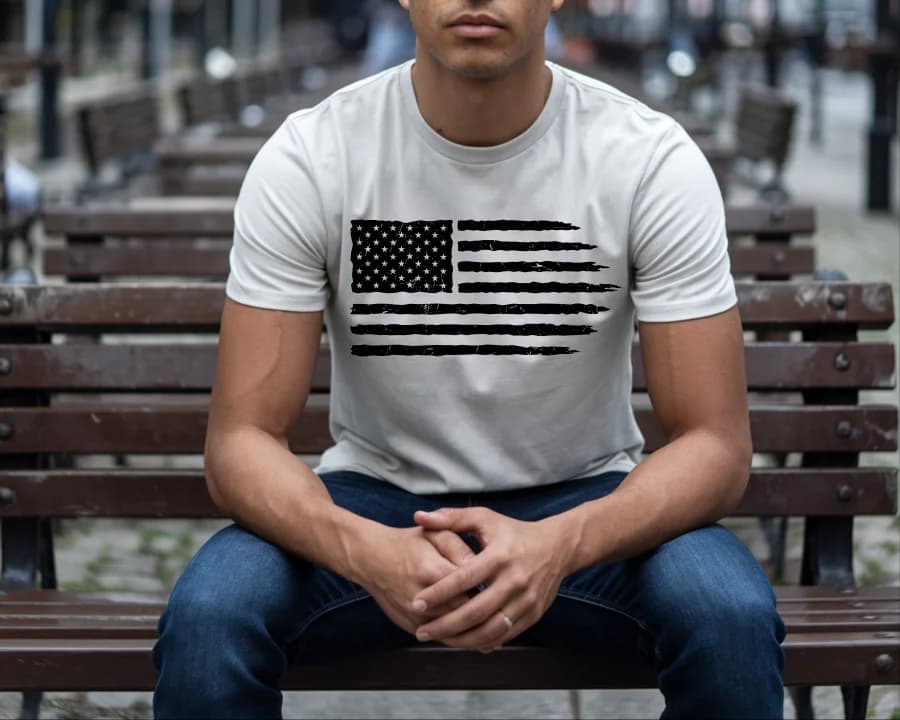
DTF Transfers
Grunge Flag
High Quality DTF Transfers, Ready to press Heat Transfers

DTF Transfers
Gamers Life Ready-To-Press DTF Transfer
High Quality DTF Transfers, Ready to press Heat Transfers
DTF Transfers
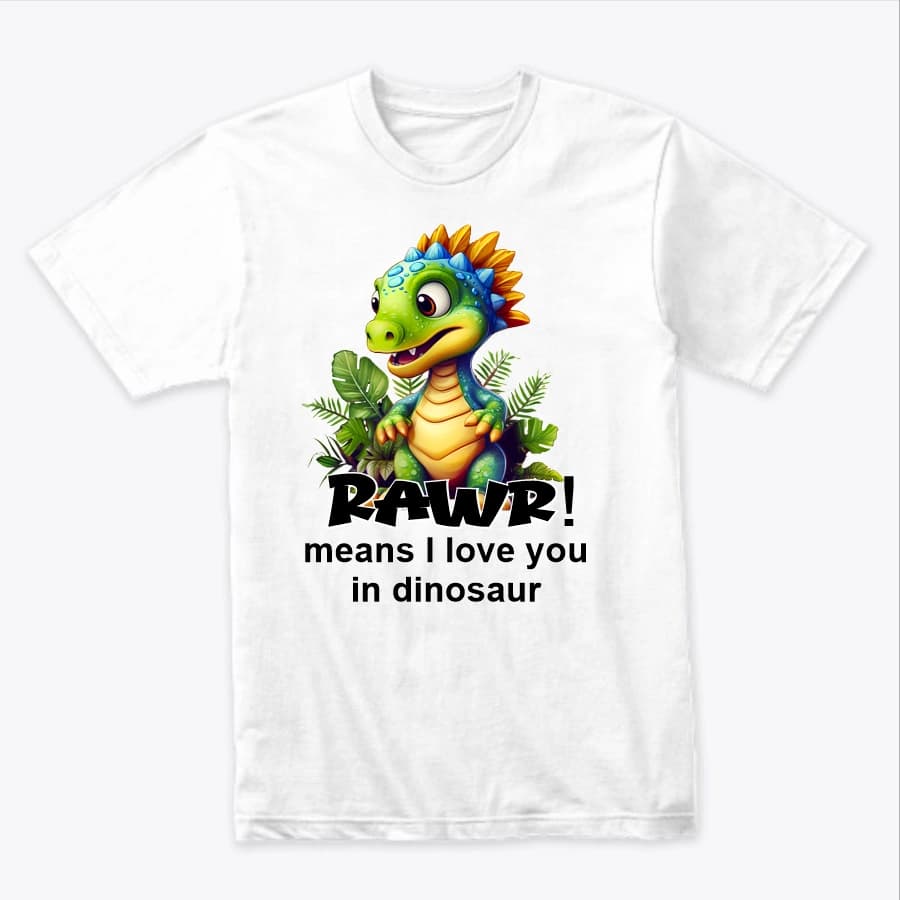
Rawa means I Love You
Rawa means I Love You -- Heat-applied DTF transfer for cotton, polyester, and any color fabric. Soft-feel finish, no weeding required.
DTF Transfers
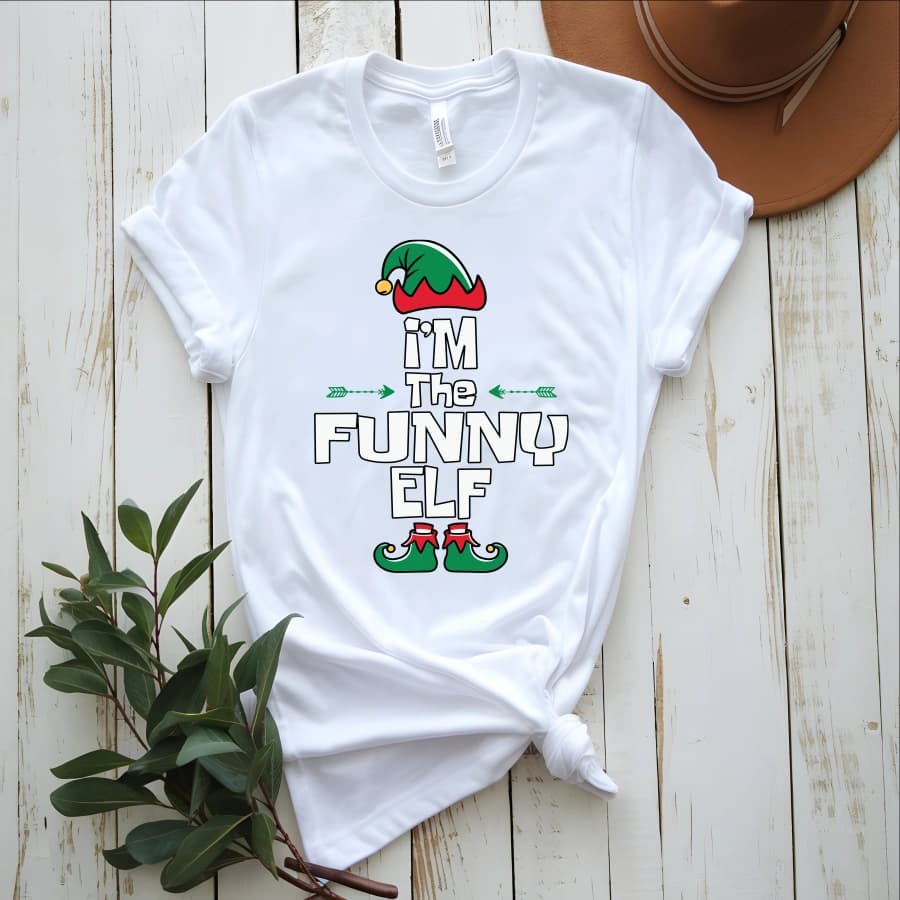
I'm the funny elf
I'm the funny elf -- Heat-applied DTF transfer for cotton, polyester, and any color fabric. Soft-feel finish, no weeding required.
Ready to press your next design?
Shop premium DTF transfers and sublimation products. No minimums. Ships in 2-3 business days.
Browse All Products